Digging a pool with a mini excavator: machine, buckets and time needed
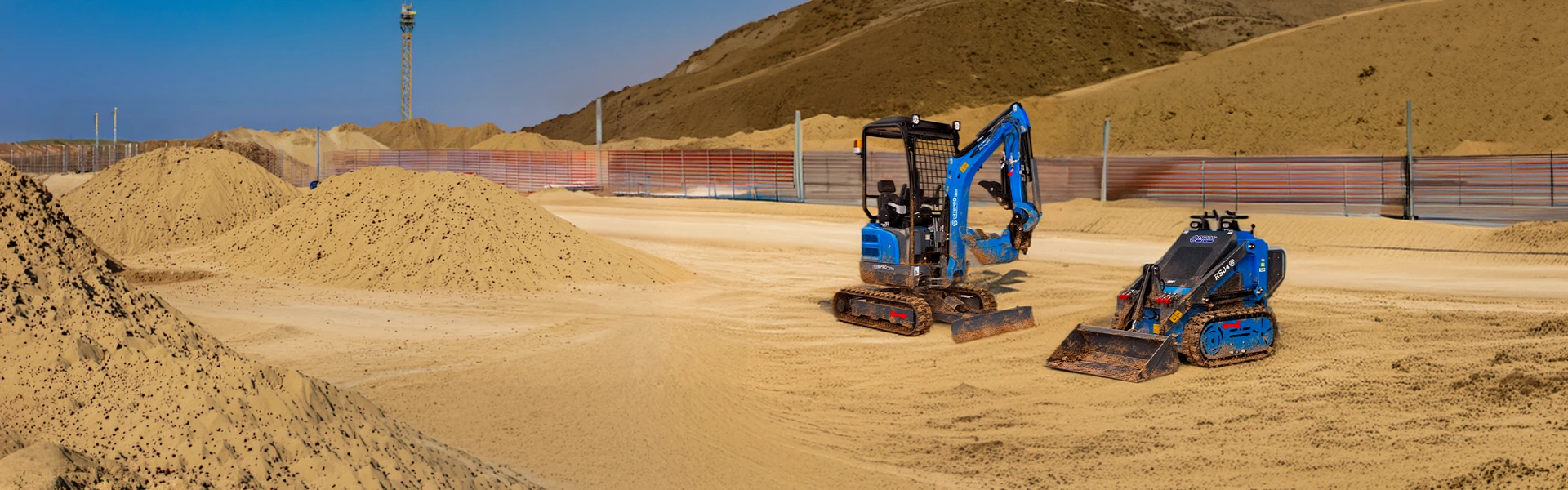
Are you planning a pool in your garden and thinking of digging the pit yourself? With a mini excavator, you can do it in a few days. What matters is the digging depth of the machine, the width of your access and the amount of soil you will dig out. Here you will find out which Rippa excavator is the right one, which buckets you need and how long the excavation takes.
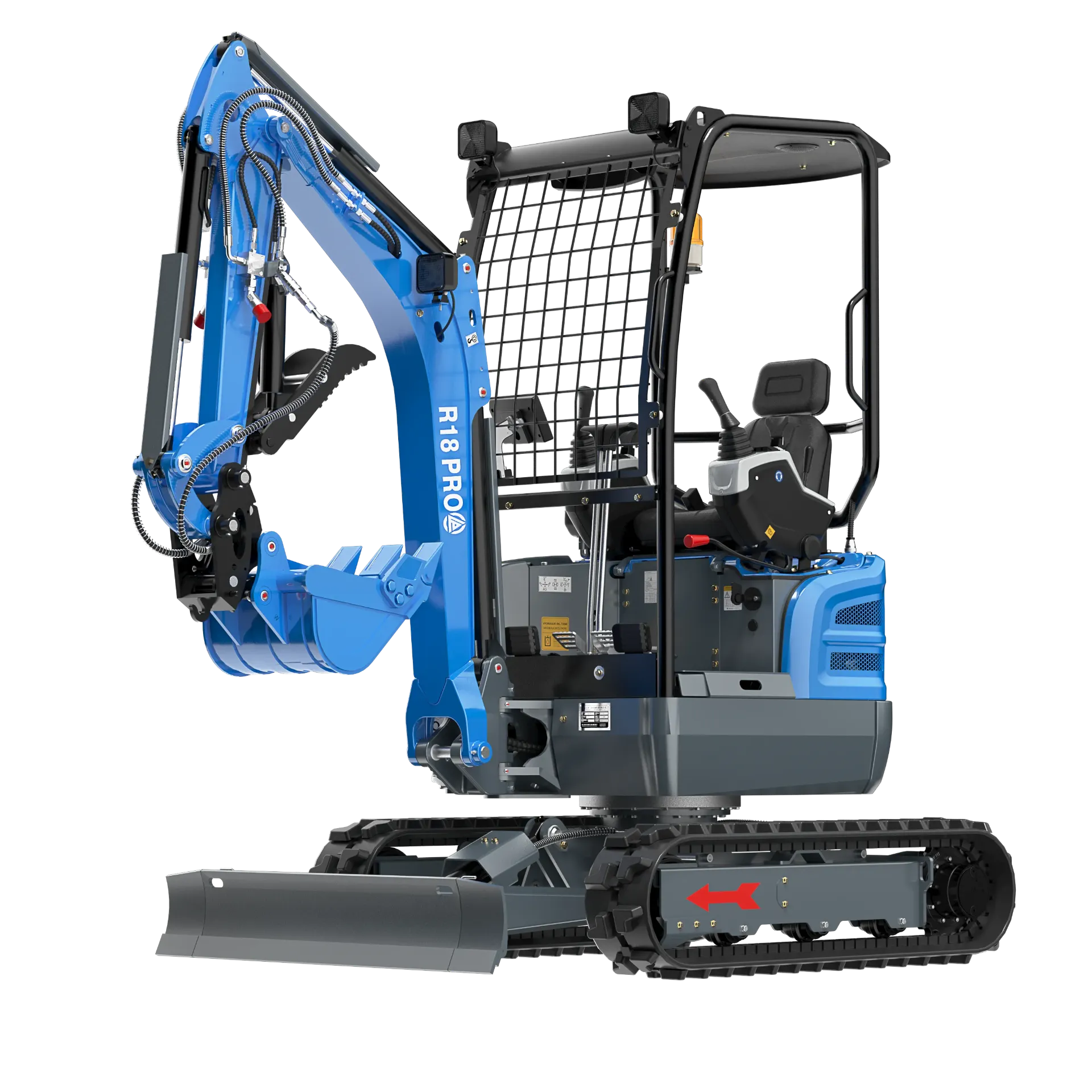
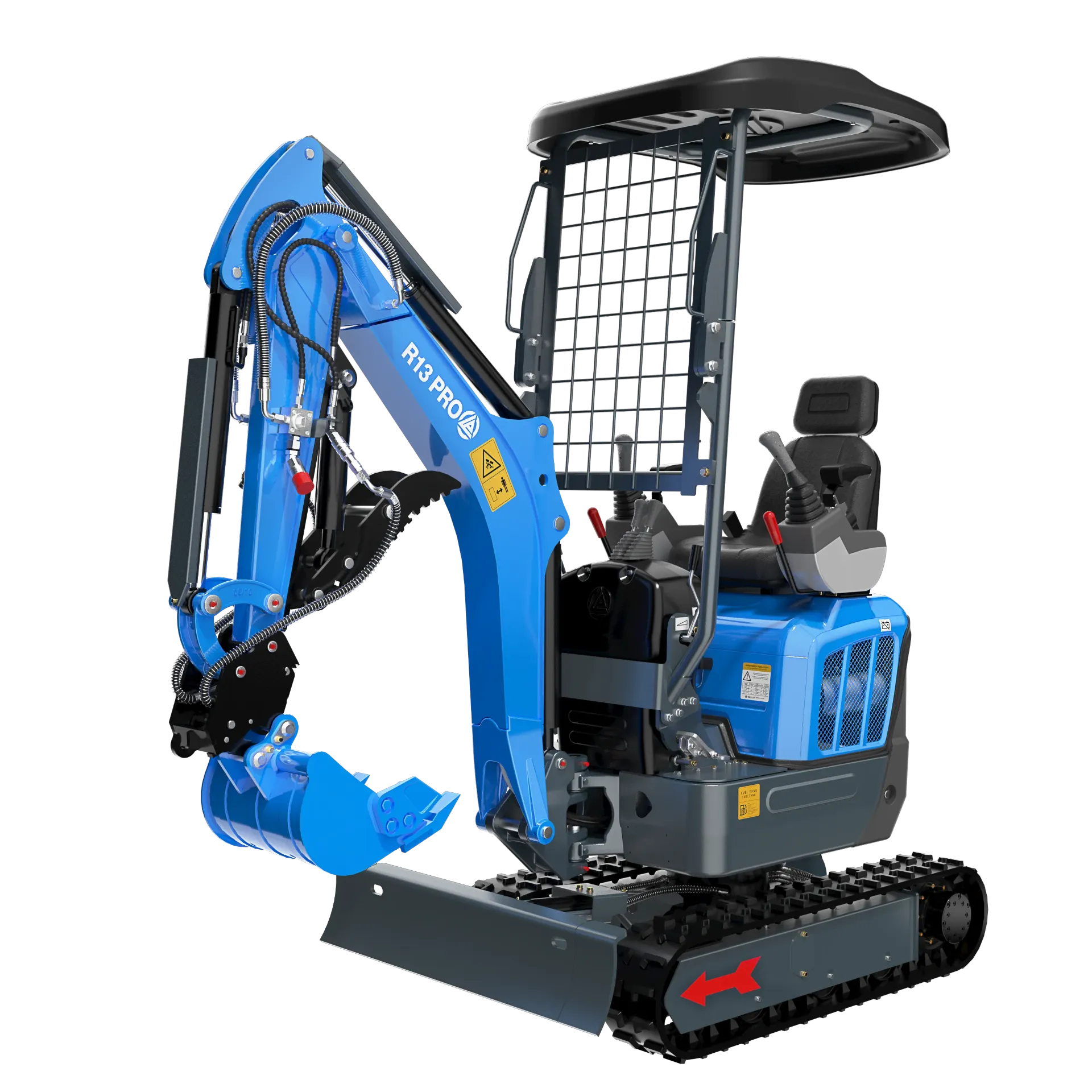
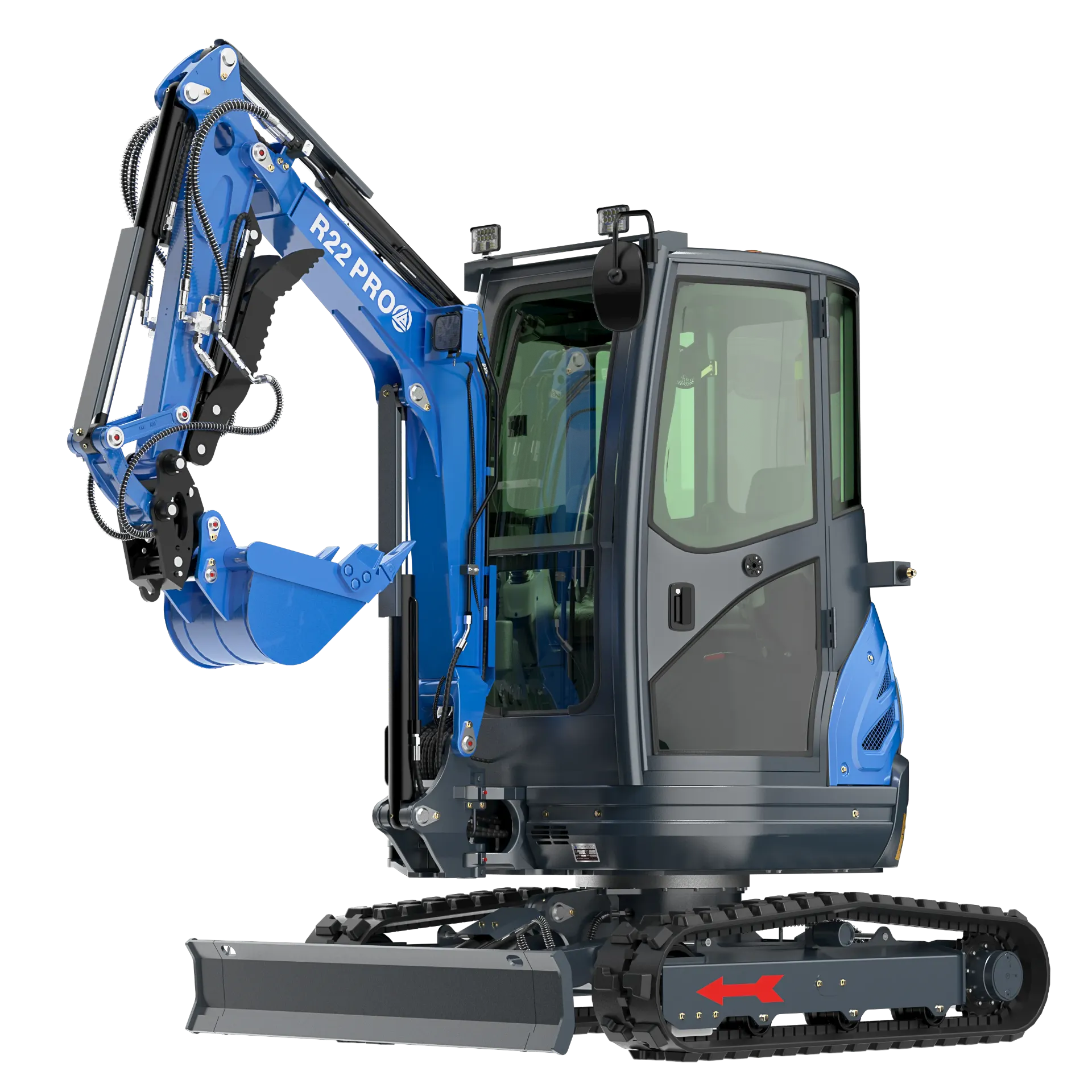
- Digging depth: for a pool 1.5 m deep, you dig down about 1.8 m, because gravel and a base slab go underneath. Excavators with a digging depth of about 2 m or more are suitable, for example the R13 PRO, the R18 PRO or the R22 PRO.
- Buckets: for digging out you need a digging bucket with teeth, and for a level pit bottom a wide grading bucket without teeth.
- Soil volume and time: including working space and slopes, a 6 × 3 m pool produces around 74 m³ of soil. With the R18 PRO, expect about two working days of net digging time.
Which Rippa excavator suits your pool?
Three figures matter: the digging depth must be enough for the pool plus the base layer and slab, the machine must fit through your access, and a high dump height helps when you load skips or lorries. Allow a margin on the digging depth, because right in the corners of the pit the bucket does not reach full depth.
| Model | Digging depth | Width | Dump height | For your pool |
|---|---|---|---|---|
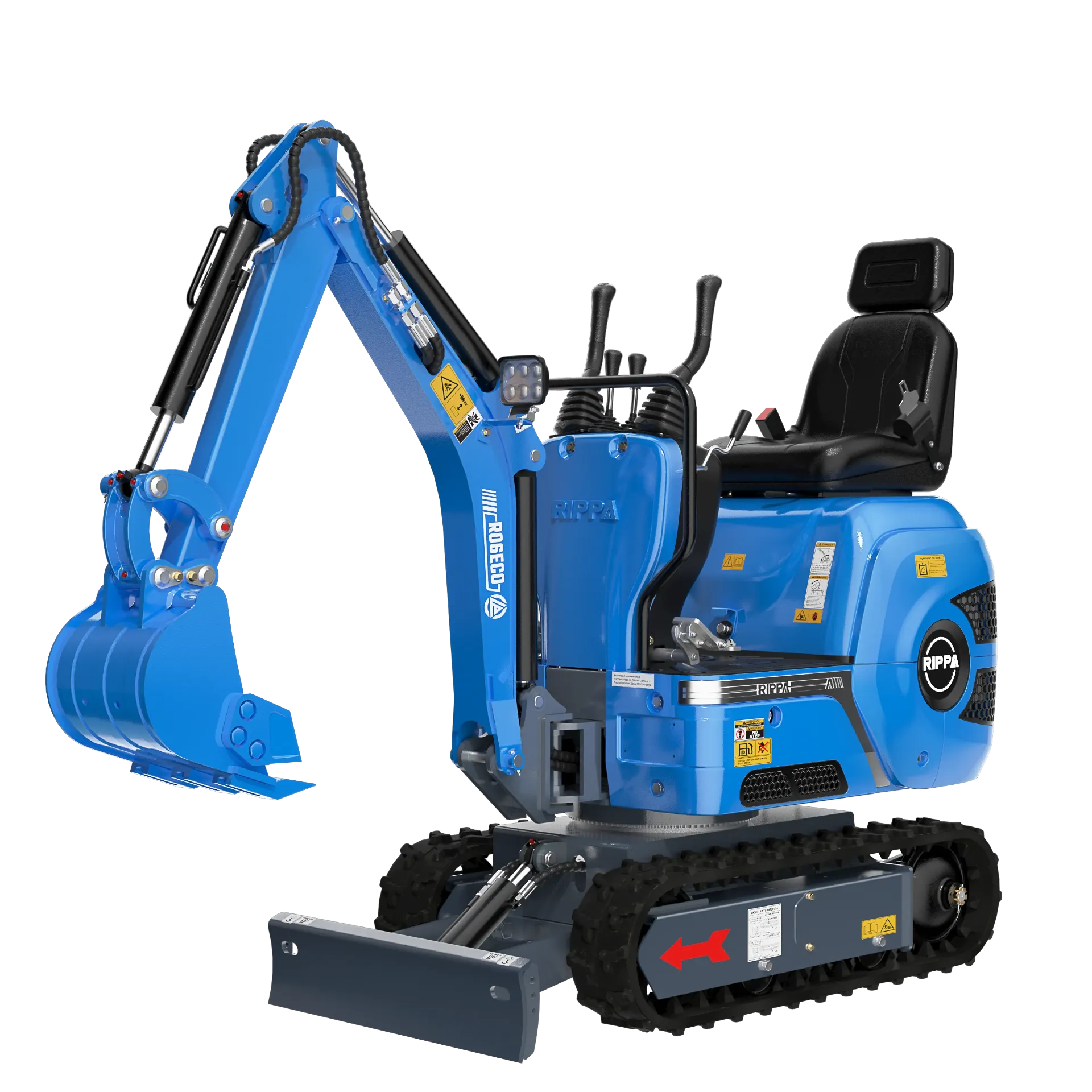 R06 R06 | 1.26 m | 747 mm | 1.57 m | small pools up to about 0.9 m deep |
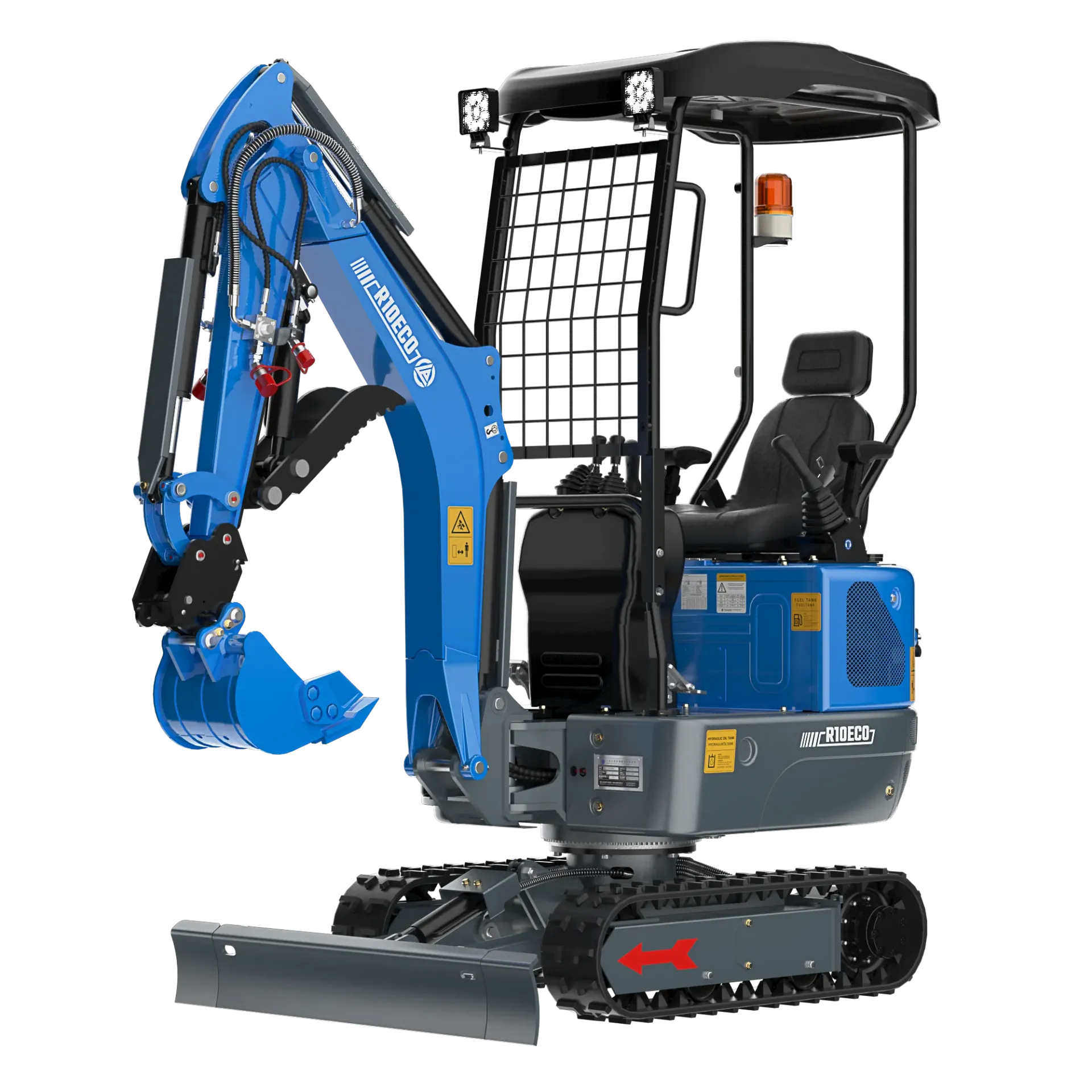 R10 ECO R10 ECO | 1.56 m | 917 mm | 1.83 m | pools up to about 1.2 m deep |
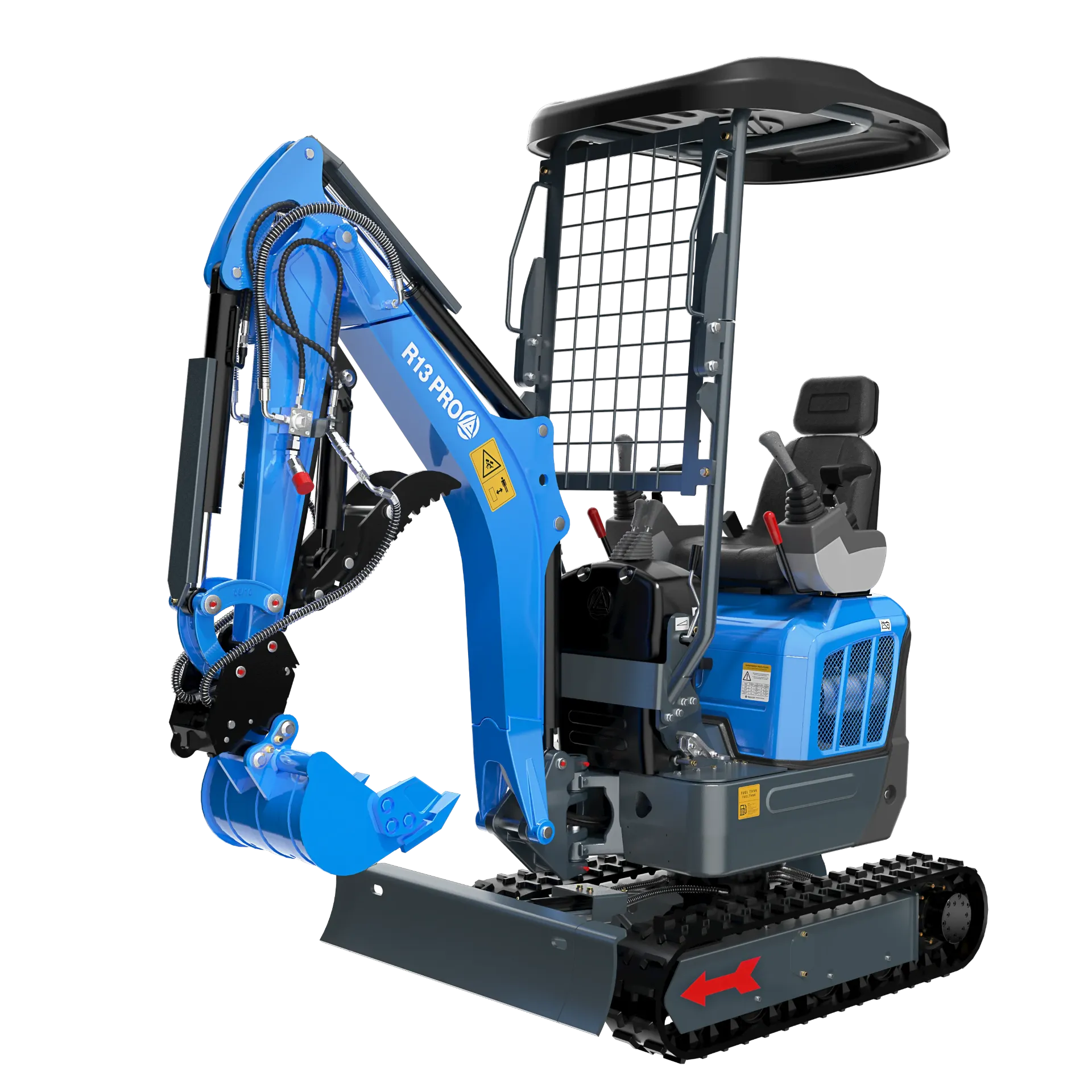 R13 PRO R13 PRO | 2.04 m | 849 mm | 1.92 m | pools up to 1.5 m deep with narrow access |
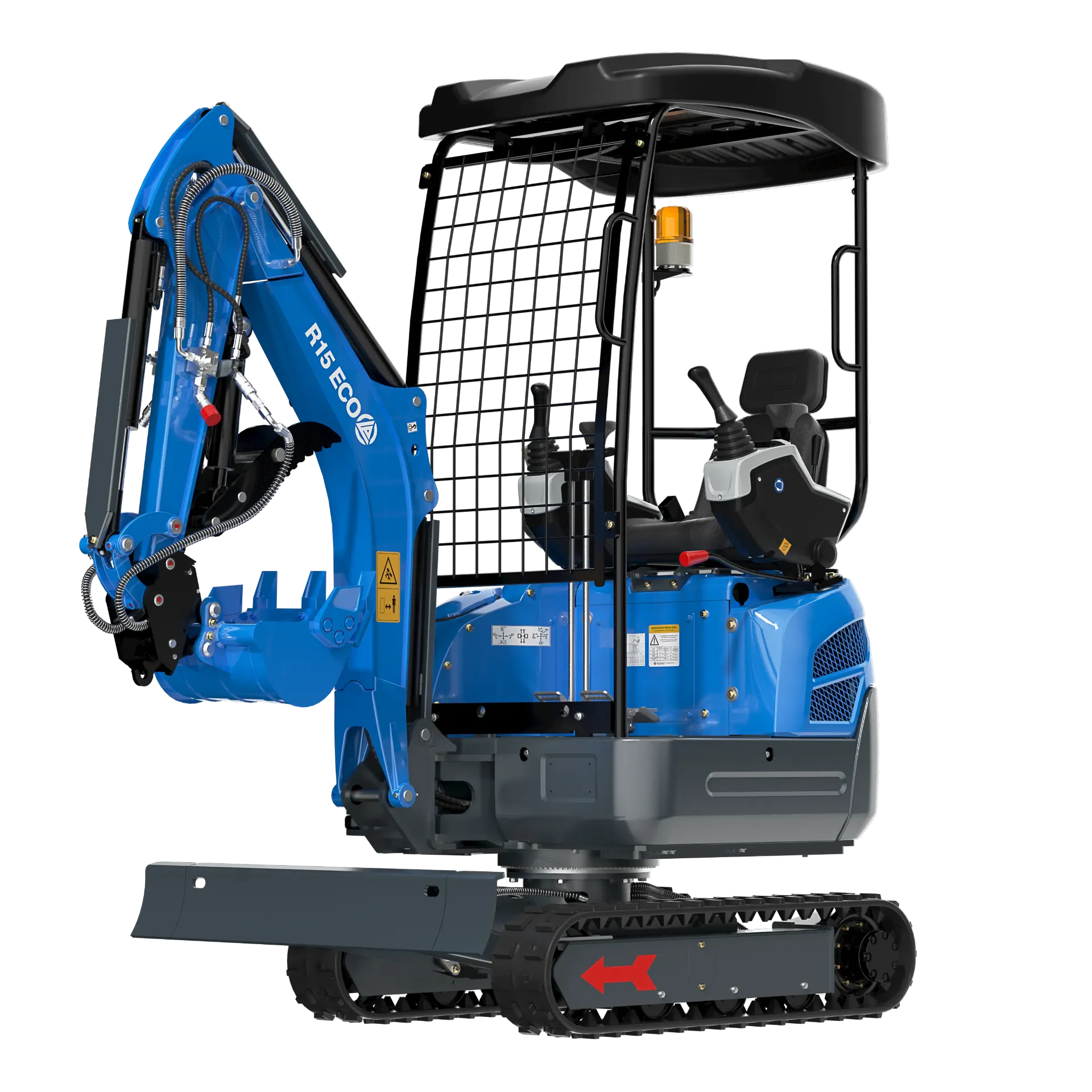 R15 ECO R15 ECO | 1.81 m | 983 mm | 2.28 m | pools up to about 1.4 m deep |
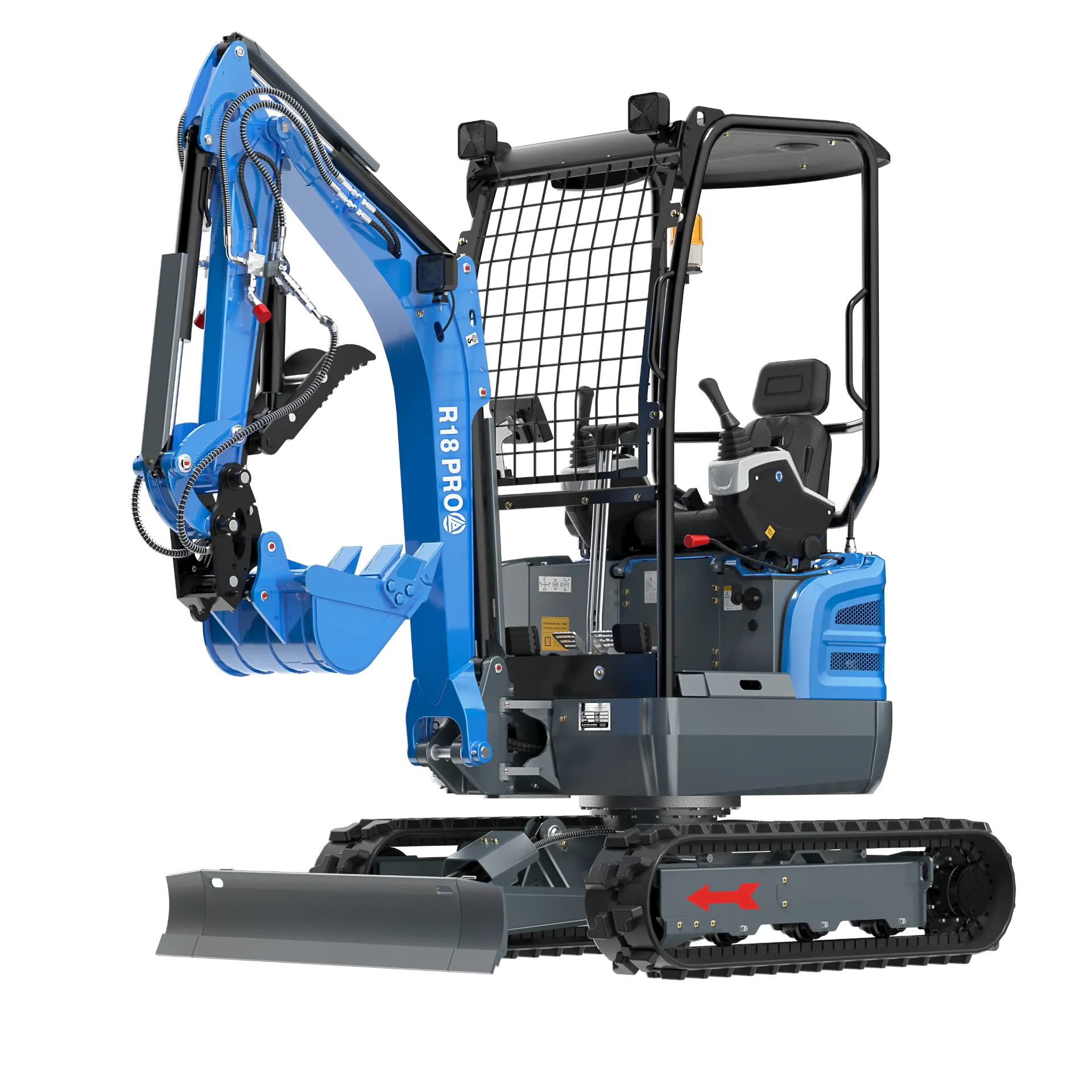 R18 PRO R18 PRO | 2.63 m | 998 mm | 2.05 m | our recommendation for most garden pools |
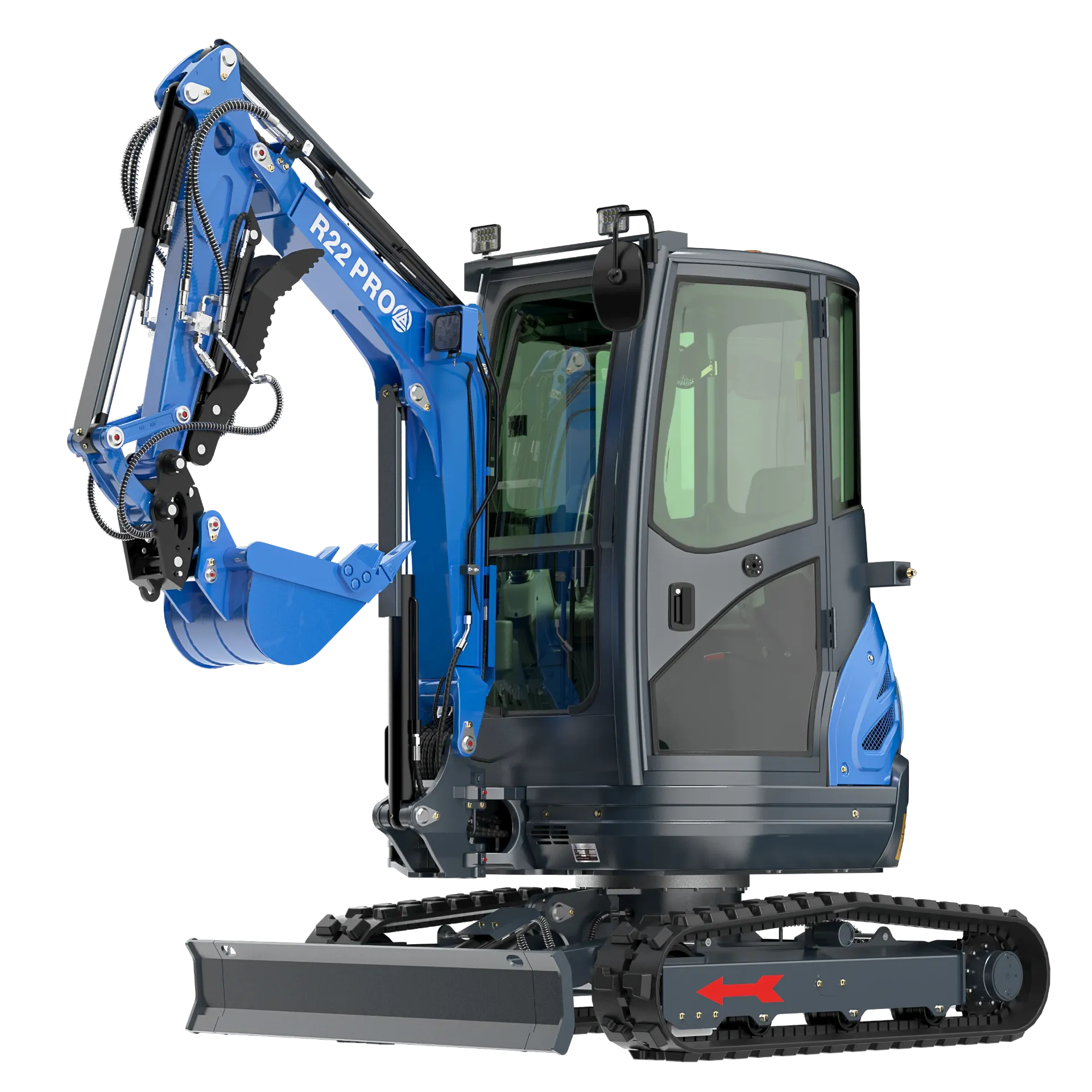 R22 PRO R22 PRO | 2.29 m | 1,540 mm | 2.50 m | large pools, loads tipper trucks directly |
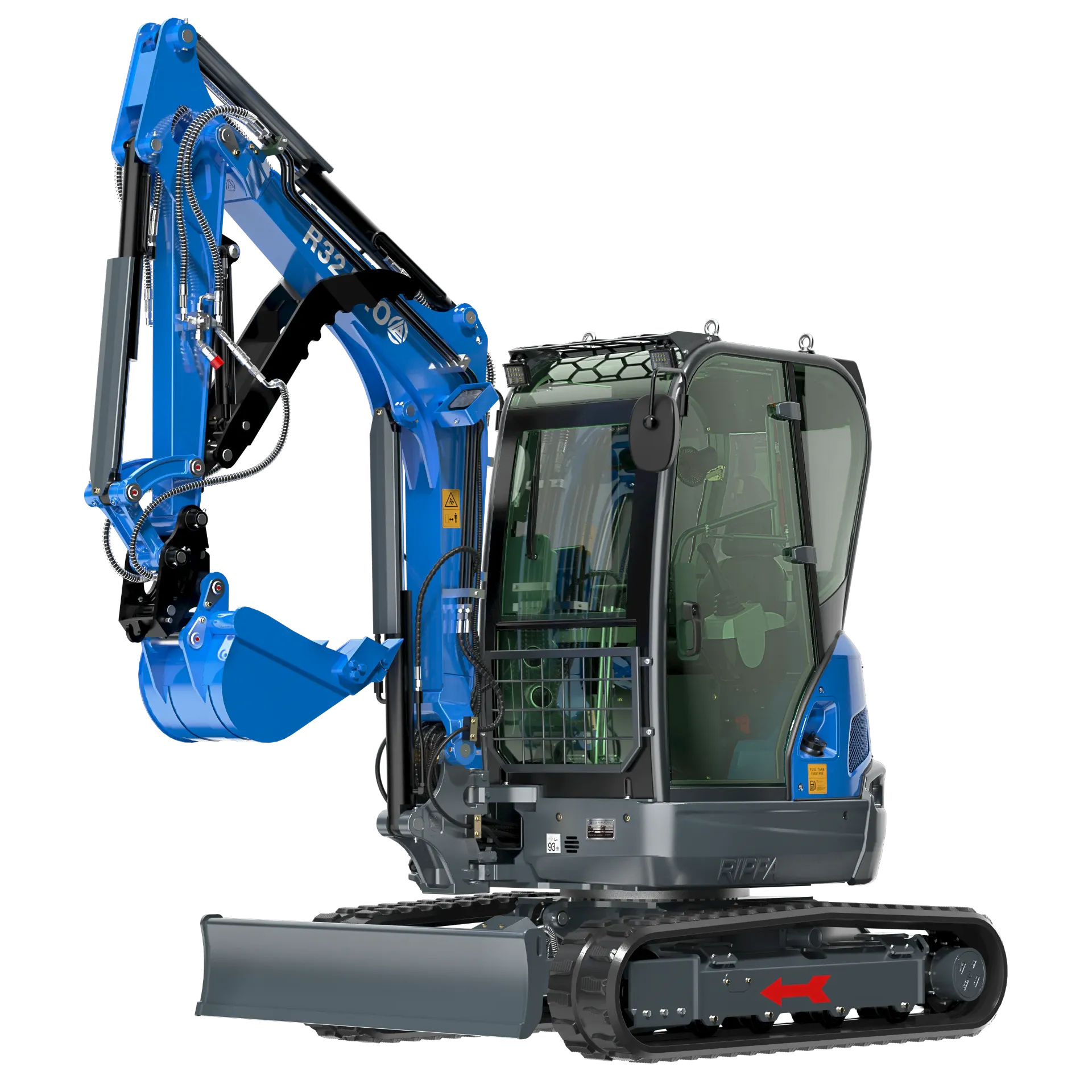 R32 PRO R32 PRO | 2.83 m | 1,550 mm | 3.18 m | large pools and swimming ponds with wide access |
For most garden pools, the R18 PRO is the best choice. With a digging depth of 2.63 m, it has enough in reserve for the pool, base and slopes, and at 998 mm wide it fits through many garden gates. If your access is narrower than 1 m, take the R13 PRO, which is only 849 mm wide. For large pools with open access, the R22 PRO works faster and, with its dump height of 2.50 m, loads tipper trucks and skips directly.
Measure the narrowest point on the way to the pool: garden gate, corner of the house, steps and landings. Also check that the route can carry the weight of the machine. Ground protection mats help on lawns and paving, and the rubber tracks of all Rippa excavators are gentle on the ground as well.
The buckets you need
The right bucket makes the excavation faster and the pit cleaner. For a pool you need two tools, ideally three:
- Digging bucket with teeth: it breaks up the ground and lifts the soil out. For digging a pool pit, widths of 40 to 60 cm work well, for example the digging bucket for the R18 PRO or the digging bucket for the R13 PRO.
- Grading bucket with a smooth edge: without teeth, its straight cutting edge levels off the pit bottom and shapes clean slopes. Choose a width of 80 to 100 cm for this, such as the grading bucket for the R18 PRO.
- Tilting bucket: it tilts to the side, so you can cut slopes at the angle you want without repositioning the machine, for example with the tilting bucket for the R18 PRO.
Later, you use the dozer blade of the machine to spread the backfill and level the area around the pool. You will find all buckets for your model under attachments for excavators.
How big the pit will be
The pit is considerably larger than the pool itself, because of three allowances:
- Working space: around the pool you need room for assembly, sealing and backfilling. Allow 40 to 50 cm on each side, or follow the specifications of the pool manufacturer.
- Base layer and slab: under the pool you need compacted gravel and usually a concrete base slab. Together they often add up to 25 to 35 cm.
- Slope: in Germany, DIN 4124 sets the rules. From a depth of 1.25 m, the walls may no longer be vertical as soon as anyone works in the pit. From 1.75 m, the pit must be sloped from the bottom to the top: at no more than 45° in sand and 60° in stiff clay. Other countries have comparable rules. More on this under Safety.
Worked example: 6 × 3 m pool, 1.5 m deep
Here is how to work out the soil volume and digging time for a typical garden pool in stiff clay:
- Pit bottom: a 6.0 × 3.0 m pool plus 0.5 m of working space all round gives 7.0 × 4.0 m.
- Depth: 1.5 m for the pool plus 0.3 m for the base layer and slab gives 1.8 m.
- Slope: at a depth of 1.8 m and a slope of 60°, the pit becomes just over 1 m wider on each side. At the top it measures about 9.1 × 6.1 m.
- Soil volume: this gives around 74 m³ of in-situ soil (bank volume). In sand with a 45° slope, it would be around 94 m³.
- Loose volume: excavated soil takes up more space than it did in the ground. For clay, use a bulking factor of 1.3; for sand, about 1.1 to 1.2. This turns 74 m³ into around 96 m³ of loose soil.
You can estimate the digging time with this rule of thumb:
According to the data sheet, the standard bucket of the R18 PRO holds 0.045 m³. For an experienced operator, one cycle of digging, slewing and dumping takes about 20 seconds, which makes 180 cycles per hour. With a fill factor of 80%, the R18 PRO moves around 6.5 m³ of loose soil per hour, which is about 5 m³ of in-situ soil. For the 74 m³ in the example, you therefore need around 15 hours of net digging time.
In practice, allow two to three working days with the R18 PRO, because repositioning, fine work on the pit bottom and breaks add to the time. Smaller machines such as the R13 PRO have a smaller bucket and take correspondingly longer.
Where should the soil go?
Around 96 m³ of loose soil is far more than most people expect. So before you break ground, plan where the soil will go:
- Store the topsoil separately: strip the humus-rich top layer of about 20 to 30 cm first and store it separately. You will need it later for the lawn and flower beds.
- Keep soil for backfilling: once the pool is installed, you fill the working space and the slopes back in. Part of the excavated soil can therefore stay on your property if you have room for a heap.
- Take the rest away: skips usually hold 5 to 10 m³, so for the remaining soil you need several skips or lorry loads. Ask for prices in advance, because disposal costs vary widely depending on the region and the type of soil.
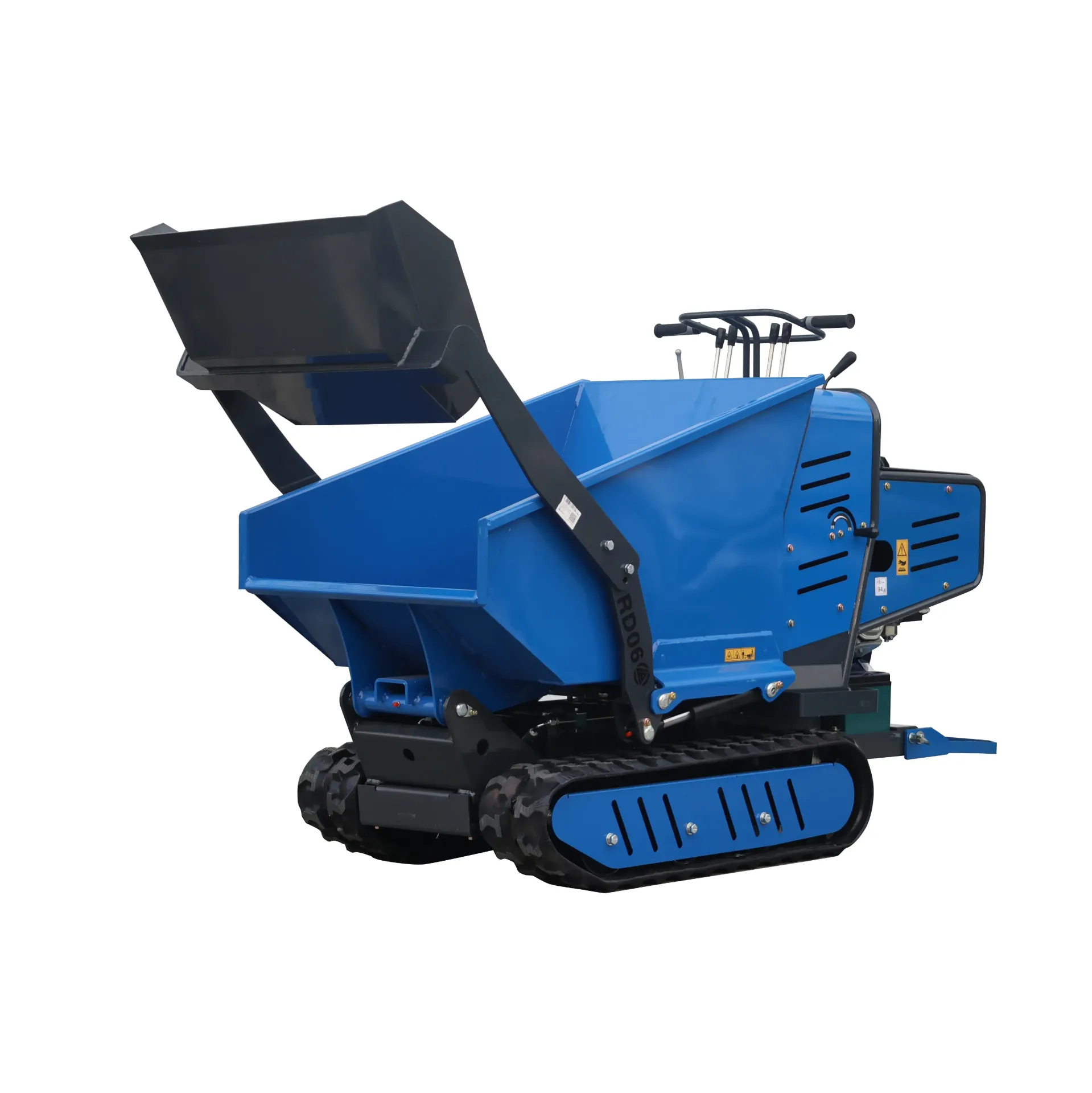
If the skip is further away, a dumper takes the soil there. The RD06 tracked dumper is only 780 mm wide, holds 0.27 m³ in its hopper, and its rubber tracks let it drive over lawns too. If the lorry can get close enough, an R22 PRO or R32 PRO loads it directly, thanks to a dump height of 2.50 m and 3.18 m respectively.
Safety: slopes, distance, utility lines
A pool pit is a construction pit like any other. In Germany, DIN 4124 sets the rules; BG BAU, the German statutory accident insurance for the construction industry, summarises them in its module on sloped excavations. Other countries have comparable rules, so check the regulations that apply where you dig; the German values below are a good guide. Follow them on a private project too, because a collapsing pit wall can be fatal:
- Check for utility lines before you dig: ask your utility companies for plans of electricity, gas, water and telecoms lines.
- Up to 1.25 m deep: vertical walls without shoring are permitted if the ground is stable and machines keep their distance.
- Up to 1.75 m deep: in cohesive soil that is at least stiff, you can work without shoring if the part of the wall more than 1.25 m above the bottom is sloped at no more than 45° or otherwise secured.
- Deeper than 1.75 m: the pit must be sloped from the bottom to the top. Without a stability analysis, the maximum angles are 45° for non-cohesive or soft cohesive soils, 60° for stiff or semi-solid cohesive soils and 80° for rock.
- Keep the edge clear: leave a strip at least 0.60 m wide free along the top edge. Do not store any soil or materials there.
- Machine distance: construction machines up to 12 t, which includes every Rippa excavator, keep at least 1 m from the top edge of the slope.
- Access: from a depth of 1.25 m, use a ladder or stairs to get into the pit. While the excavator is working, keep everyone out of the pit and out of its slewing range.
If there is groundwater, your plot is on a hillside or there are buildings right next to the pit, bring in a specialist contractor.
Digging the pit step by step
- Set out the pit: mark the pool, working space and top edge of the slope with pegs and string, and set a fixed height reference to measure from.
- Strip the topsoil: remove the top layer and store it separately.
- Dig in layers: work layer by layer with the digging bucket and load the soil straight onto a dumper, trailer or skip.
- Check slope and depth: shape the slope at the right angle and keep checking the depth with a levelling instrument or laser.
- Level the pit bottom: switch to the grading bucket and level off the bottom. Do not dig deeper than necessary, or you will have to fill and compact again.
- Build the base: spread gravel, compact it and build the base slab as specified by the pool manufacturer.
- Backfill: once the pool is in, fill the working space in layers and compact each layer. Finally, level the surface with the dozer blade.
You can take the excavator to the site yourself on a suitable trailer. What you need to know about weight, trailer and load securing is explained in our guide Transporting a mini excavator.
Do you need a permit?
Whether you need a building permit for a pool depends on your country and often on your region or municipality. In Germany, each federal state has its own building code. In Bavaria, for example, swimming pools are exempt from the permit requirement, except on undeveloped land outside built-up areas (Art. 57 BayBO). Other German states set limits on pool volume or on pool enclosures. Even a pool that needs no permit must comply with the development plan and the boundary distances. If in doubt, ask your local building authority before you dig.
The right excavator for your pool
Compare all Rippa excavators, or let the project planner recommend the right machine in just a few steps.
View all excavators Open project plannerFrequently asked questions
Suitable excavators
Sources (as of October 2026)
- Slopes and distances in Germany: BG BAU module C 469: sloped excavations and trenches (07/2021, based on DIN 4124, in German)
- Building permits in Bavaria: Art. 57 Bavarian Building Code (in German)
- Bulking factor: Bauprofessor (in German)
- Technical data from the Rippa data sheet, see “Specifications” on each product page
The calculated values are guide values for soil that is easy to dig and an experienced operator. They do not replace planning by a specialist contractor or legal advice. The regulations in force where you dig are what count.