Transporting a mini excavator: trailer, weight and driving licence
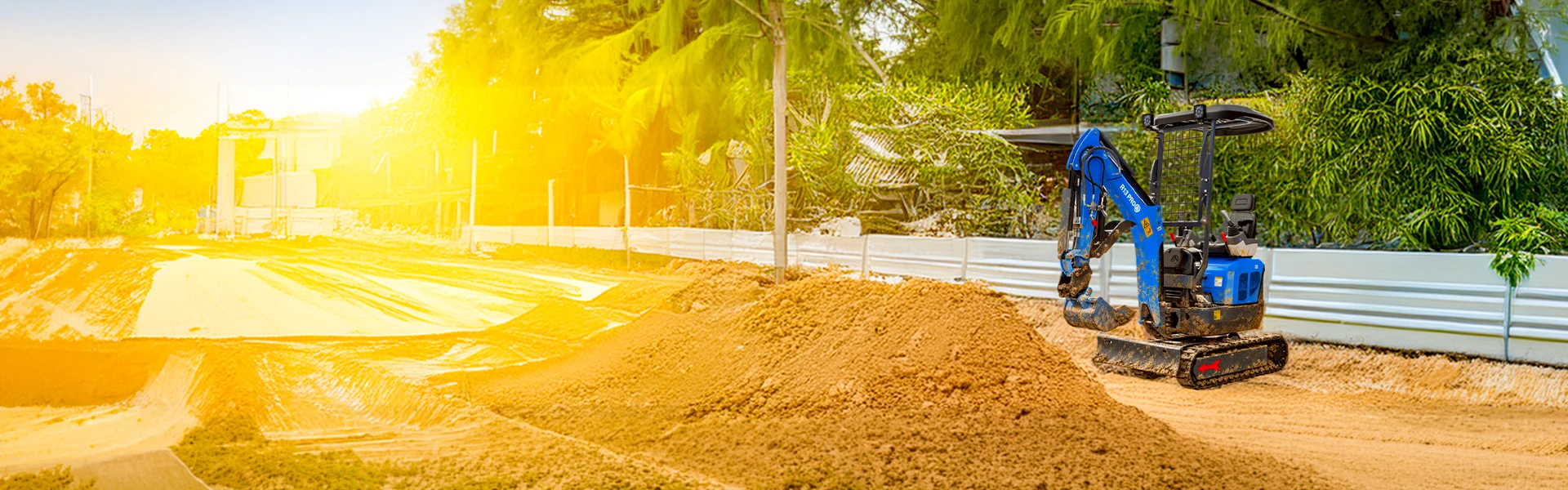
Are you planning to buy a mini excavator and wondering whether you can take it to the site yourself? Three things decide: the weight of the machine, the trailer and your driving licence. Here you will find the weights of all Rippa mini excavators, the EU licence categories and a worked example.
- Up to about 1 tonne (R06, R10 ECO): a braked trailer with a maximum authorised mass of 1,000 to 1,500 kg is enough. A category B licence covers this if car and trailer together have a maximum authorised mass of no more than 3,500 kg. Otherwise you need B96 or BE.
- 1 to 2.5 tonnes (R13 PRO to R22 PRO): as a rule you need category BE and a towing vehicle with a towing capacity of 2,000 to 3,500 kg.
- From just over 3 tonnes (R32 PRO, R57): the machine is too heavy for a car trailer. Only a lorry or delivery will do.
- Which mini excavator fits which trailer?
- Which driving licence for which combination?
- The towing vehicle: towing capacity and nose weight
- The right trailer
- Worked example: R18 PRO with SUV and trailer
- Securing the load
- Commercial users: driving times and tachograph
- Delivery or collection?
- Frequently asked questions
Which Rippa mini excavator fits which trailer?
Every Rippa mini excavator up to the R22 PRO can be transported with a car and trailer. From the R32 PRO onwards, the machine is heavier than a car trailer can carry.
| Model | Weight (data sheet) | Transport width | Trailer payload from approx. | Licence usually needed |
|---|---|---|---|---|
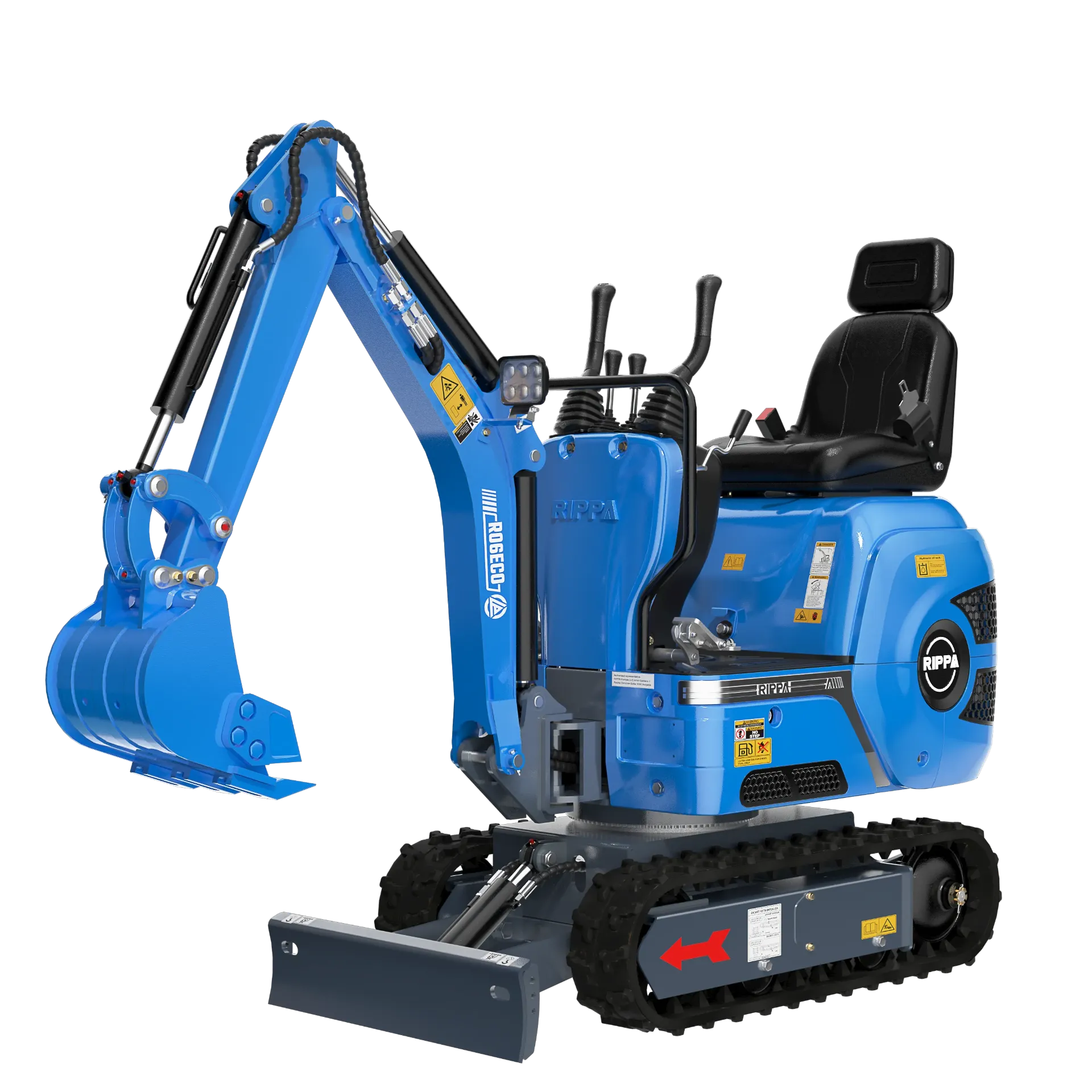
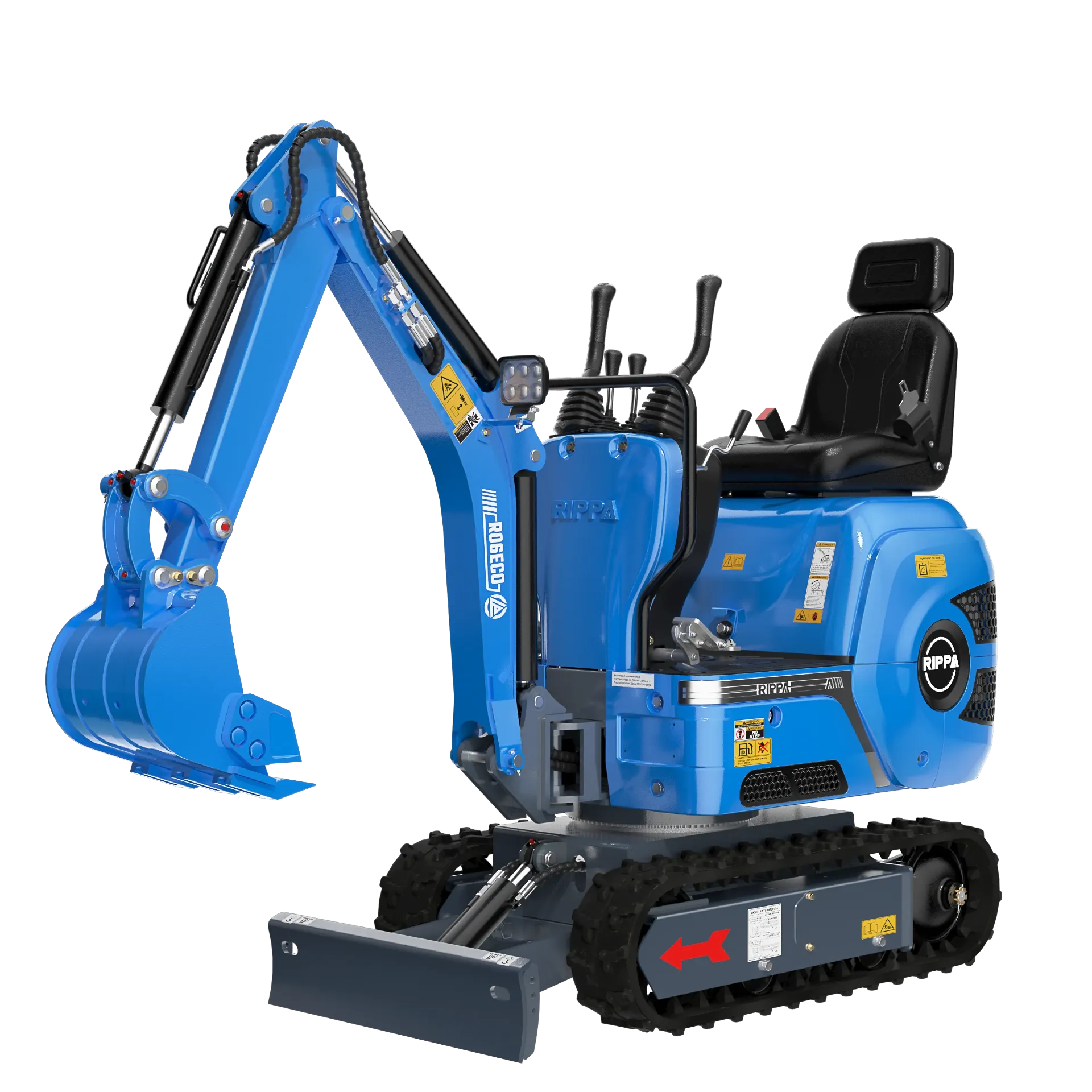 R06 R06 | 735 kg | 747 mm | 800 kg | B, otherwise B96 or BE |
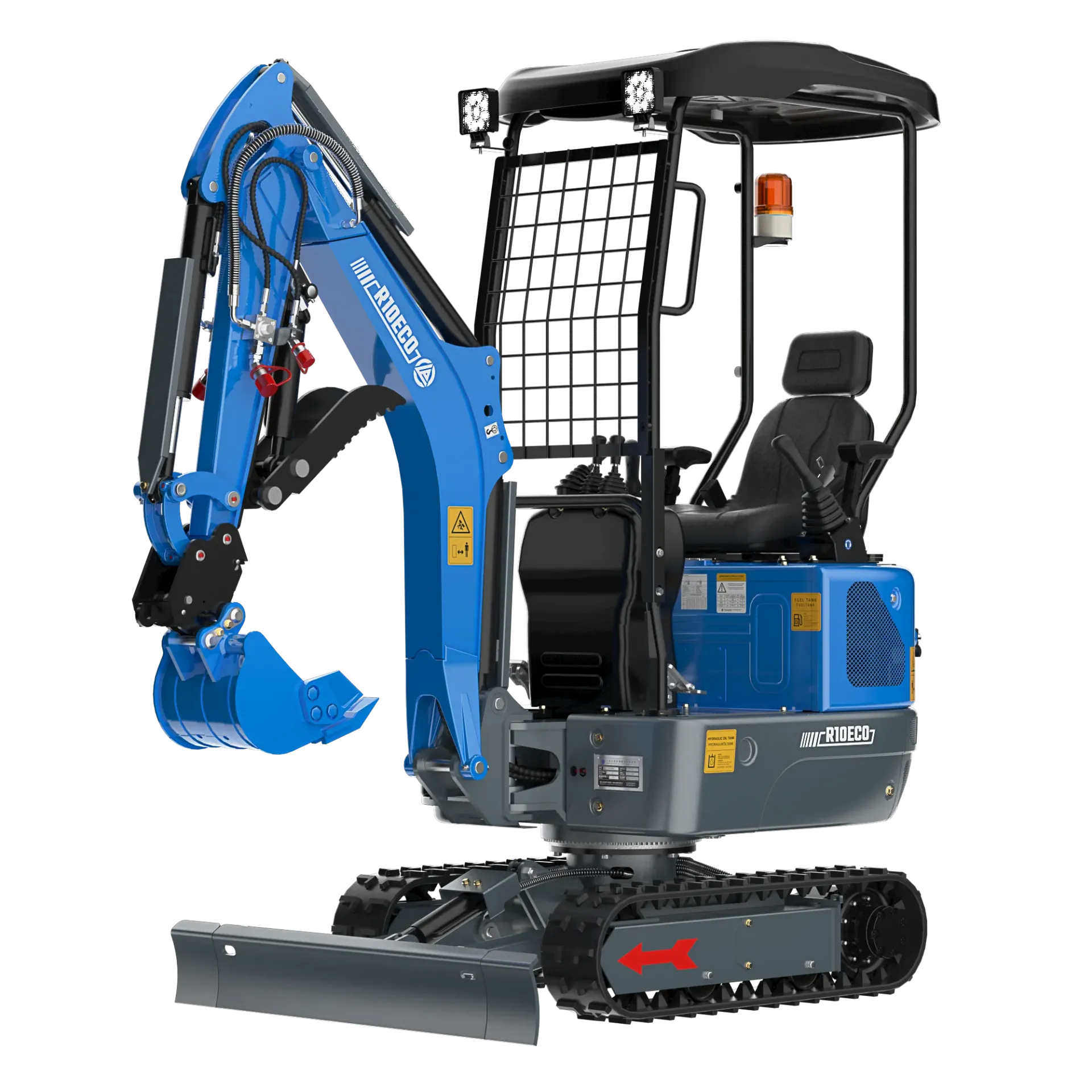 R10 ECO R10 ECO | 1,028 kg | 917 mm | 1,100 kg | B96 or BE (B only with a light car) |
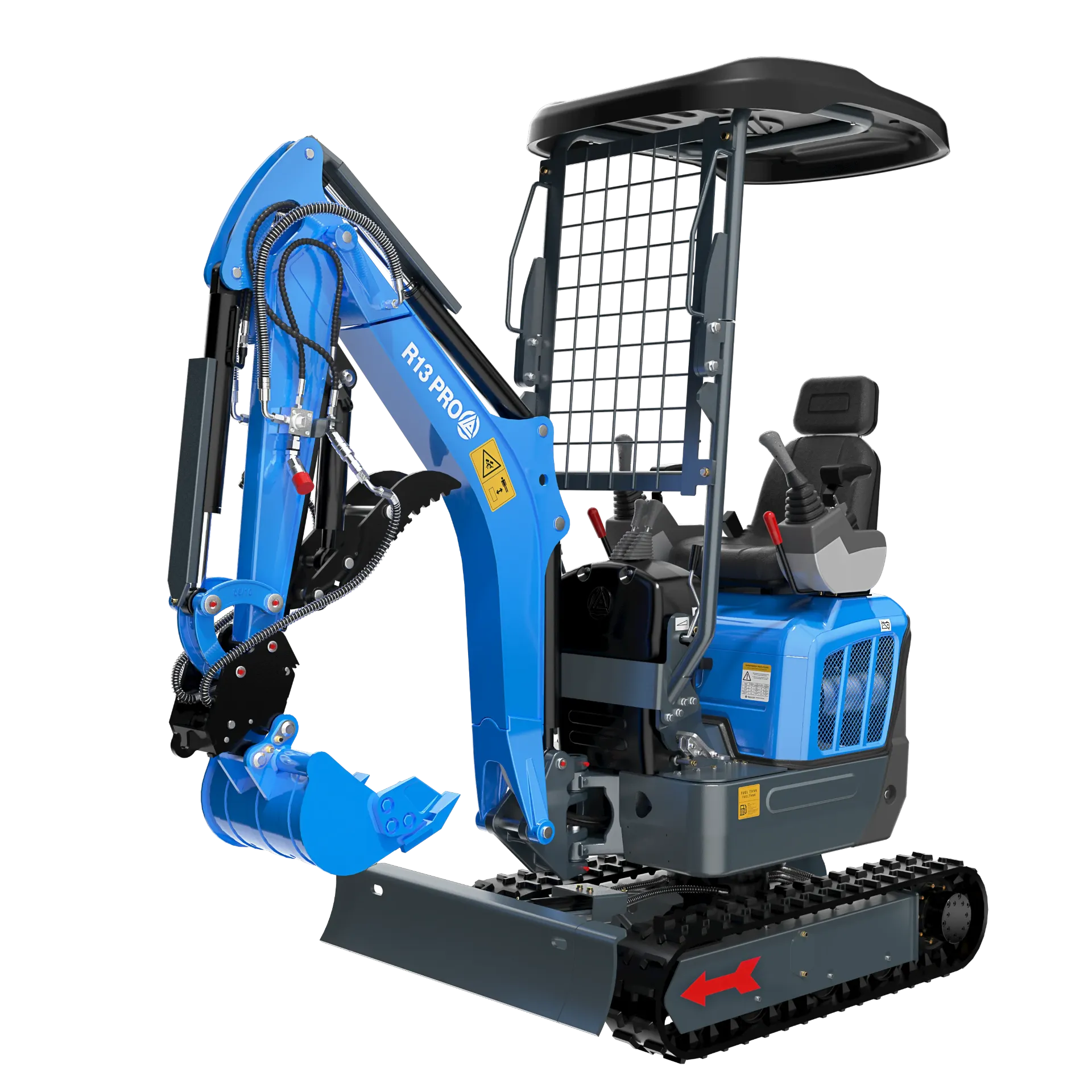 R13 PRO R13 PRO | 1,320 kg | 849 mm | 1,400 kg | BE (B96 only with a light car) |
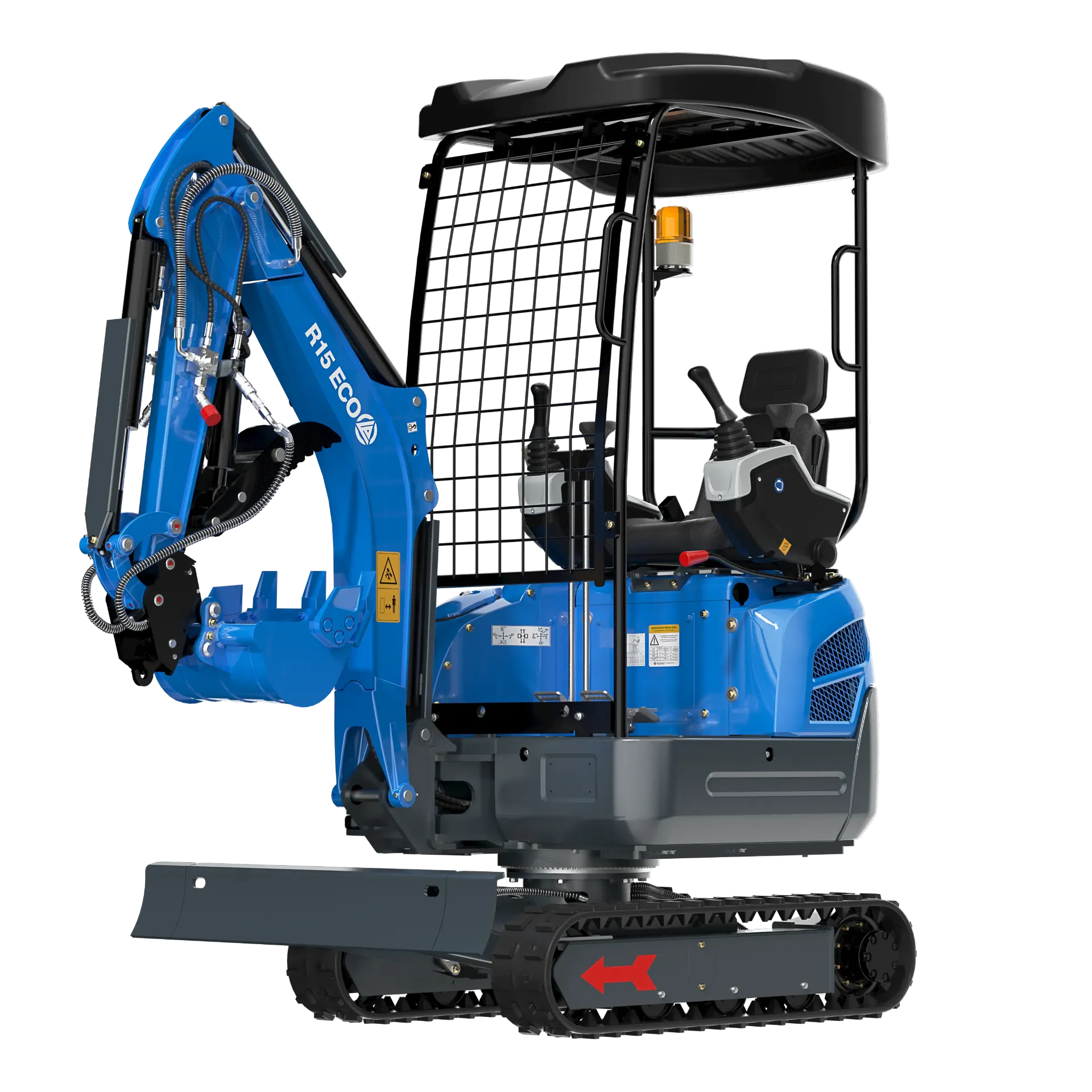 R15 ECO R15 ECO | 1,445 kg | 983 mm | 1,500 kg | BE |
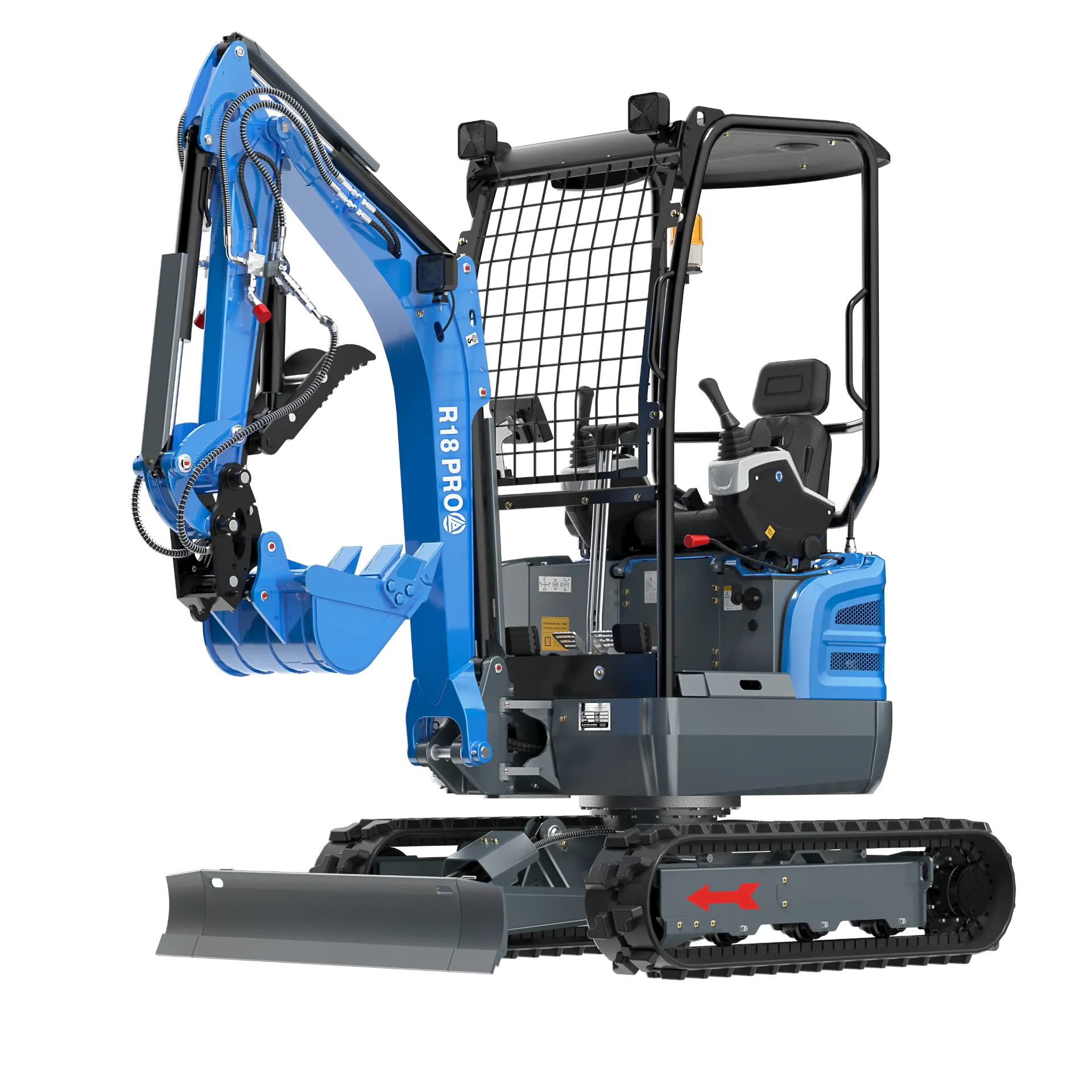 R18 PRO R18 PRO | 1,818 kg | 998 mm | 1,900 kg | BE |
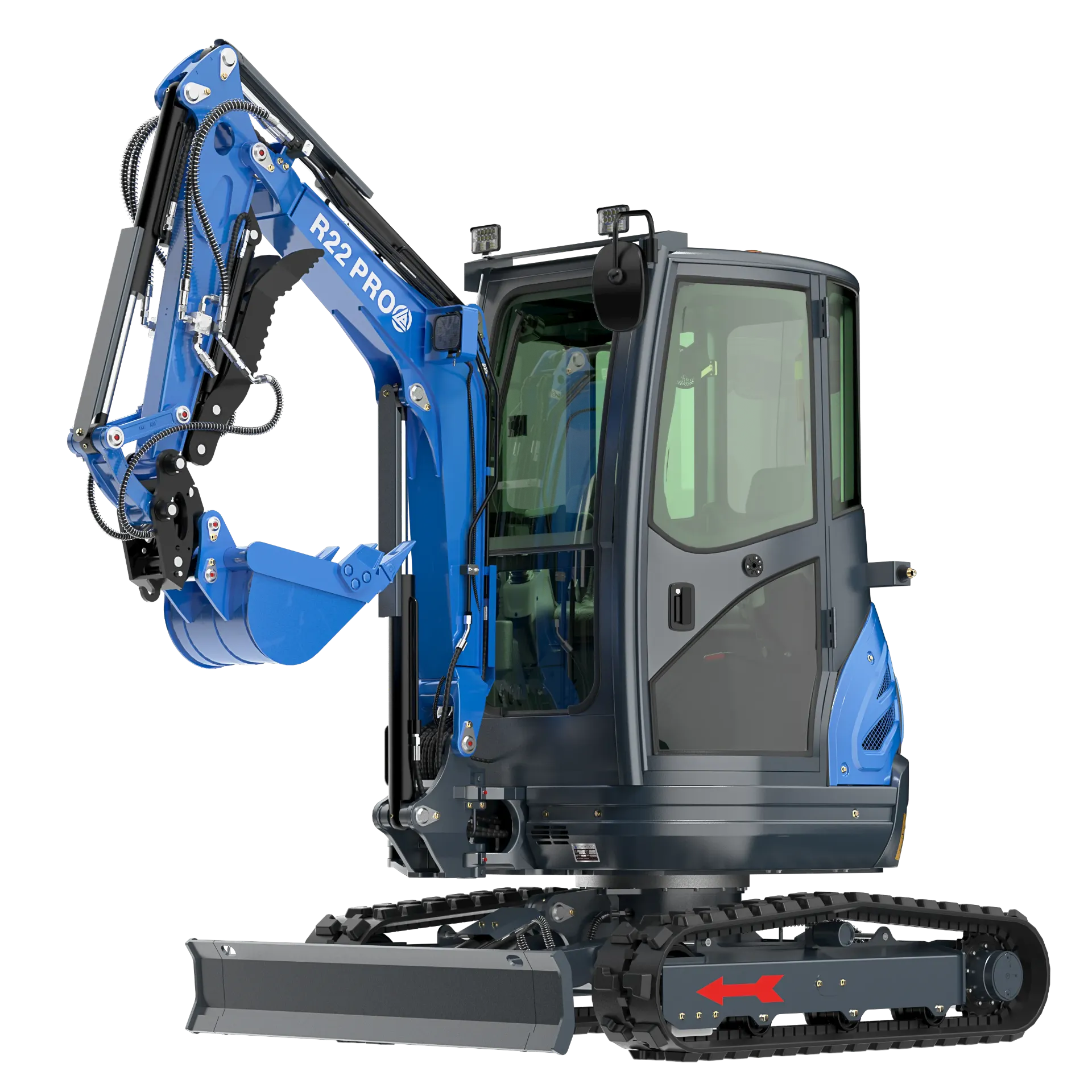
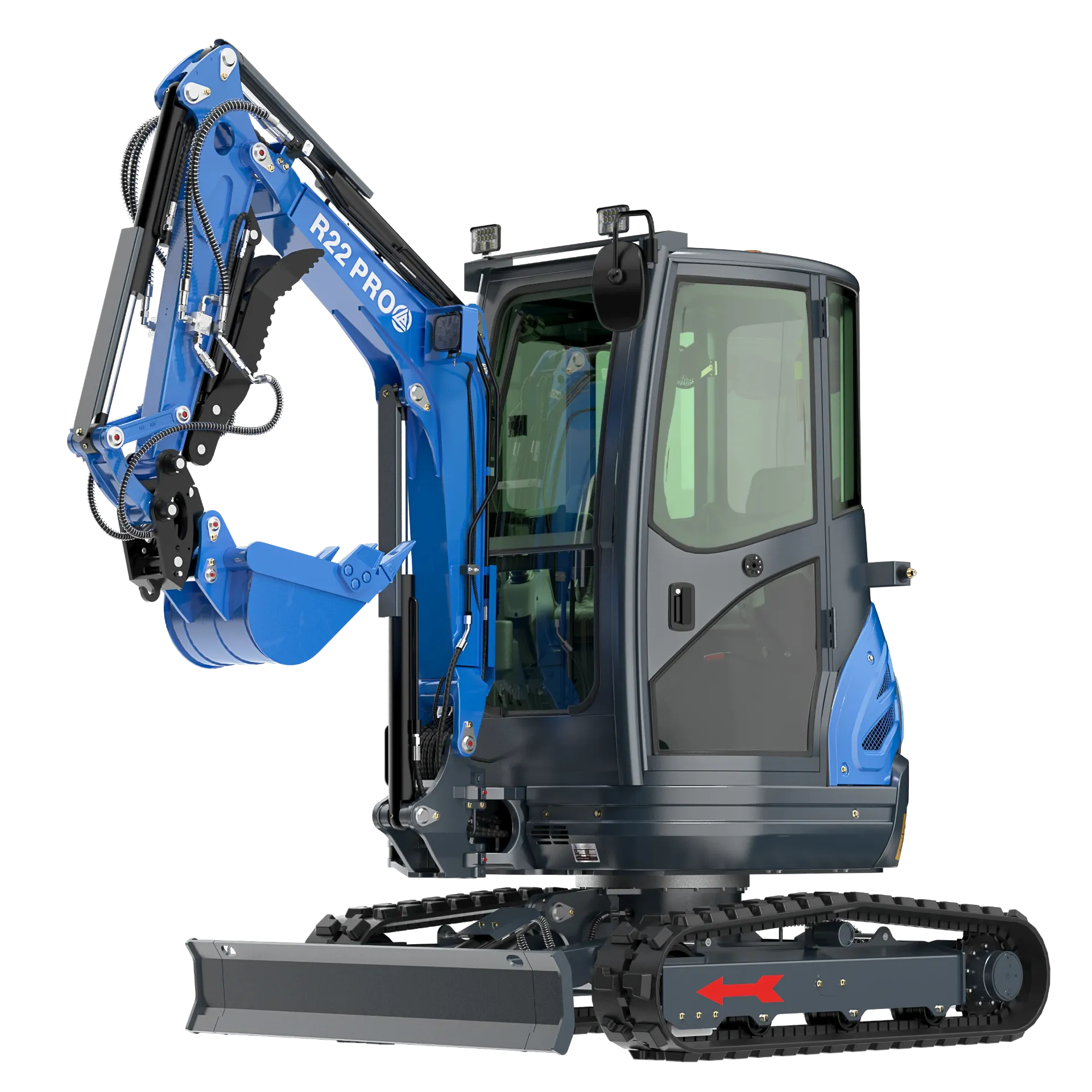 R22 PRO R22 PRO | 2,439 kg | 1,540 mm | 2,500 kg | BE, towing vehicle with 3,500 kg towing capacity |
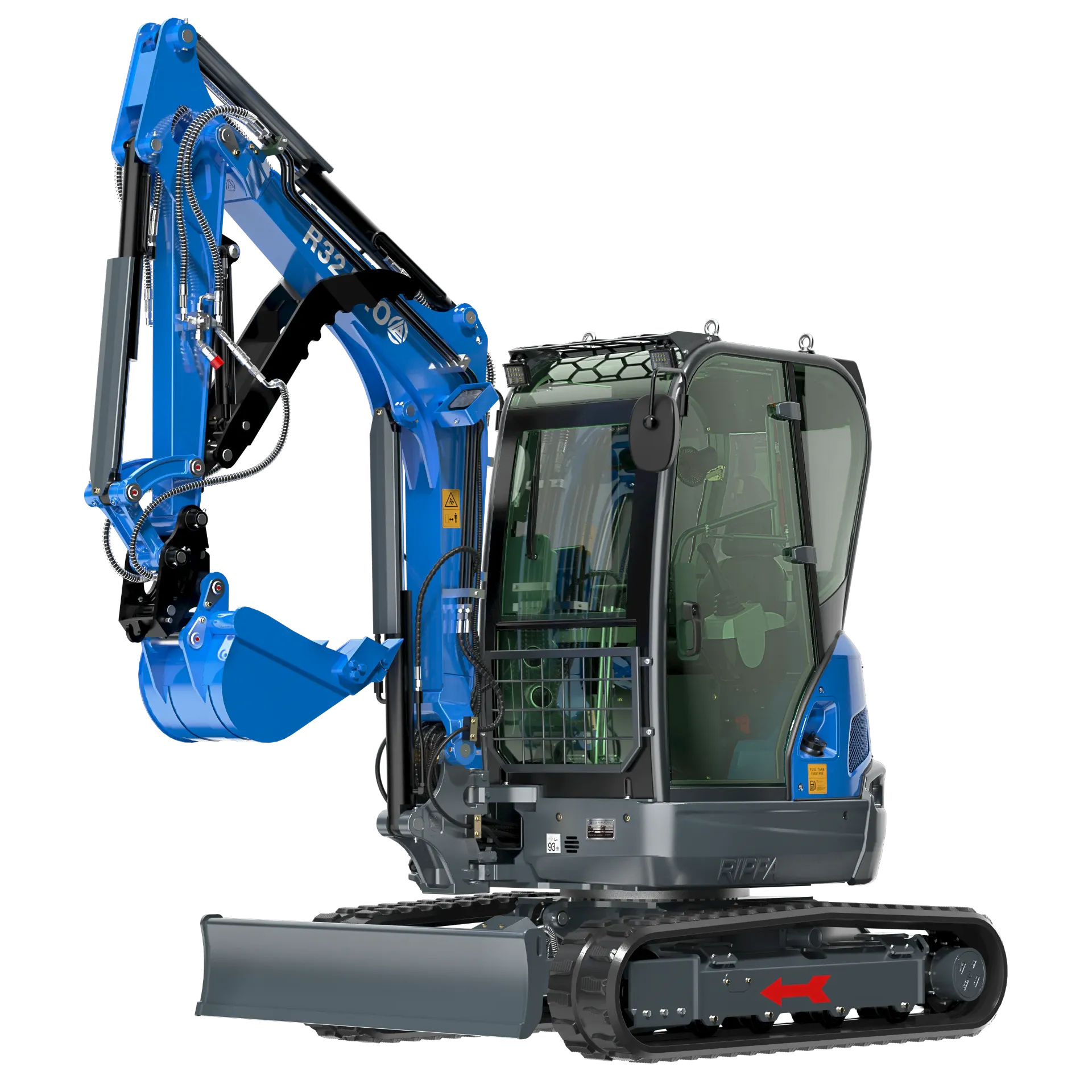 R32 PRO R32 PRO | 3,371 kg | 1,550 mm | too heavy for a car trailer | Lorry (C1 or C1E) or delivery |
 R57 R57 | 5,792 kg | 1,885 mm | too heavy for a car trailer | Lorry or low loader (C/CE) or delivery |
How to read the table:
- Weight: the operating weight in the data sheet includes 75 kg for the operator. On the trailer the machine weighs a little less. Extra buckets and attachments add weight, though, so the figure is a good basis for your calculation.
- Payload: a car trailer may have a maximum authorised mass of no more than 3,500 kg. The trailer itself already weighs 600 to 750 kg, for example the Humbaur HS range with a payload of 2,760 to 2,830 kg. That is not enough for the R32 PRO.
- Width: the loading area must be at least as wide as the undercarriage. For the R22 PRO and R32 PRO that is just over 1.5 m.
- Licence: exactly which category you need also depends on the towing vehicle. The next sections explain this.
Which driving licence for which combination?
The licence categories and weight limits are the same throughout the EU. What counts is the maximum authorised mass in the vehicle documents, not the actual weight. For B and B96, the maximum authorised masses of towing vehicle and trailer are added together.
| Category | What you may tow | How to get it | Suitable for |
|---|---|---|---|
| B | Trailers up to 750 kg, or heavier trailers if the combination has a maximum authorised mass of no more than 3,500 kg | Standard car licence | R06, with a light car also R10 ECO |
| B with code 96 | Trailers over 750 kg if the combination has a maximum authorised mass of no more than 4,250 kg | Depending on the country, a training course (e.g. Germany) or a practical test (e.g. Belgium) | R06 to R13 PRO, depending on the towing vehicle |
| BE | Trailers up to 3,500 kg maximum authorised mass behind a category B vehicle | Training and practical test | R06 to R22 PRO |
| C1E | Lorries up to 7.5 t with trailer, combination up to 12,000 kg | C1 lorry licence plus trailer category | R32 PRO |
| C / CE | Heavier lorries and combinations | Lorry licence | R57 |
Sources: the German Driving Licence Regulation § 6 FeV and § 6a FeV, and the Belgian Federal Public Service Mobility.
If you have held your licence for a long time, you may be allowed to tow more. In Belgium, for example, a category B licence issued before 1 January 1989 also covers BE. In Germany, the old class 3 includes BE, C1 and C1E. The categories and codes on your licence are what count.
The towing vehicle: check towing capacity and nose weight
Your car must be allowed to tow the loaded trailer. The rule of thumb: the braked towing capacity must be at least the weight of the machine plus the unladen weight of the trailer.
- Braked towing capacity: it is shown in field O.1 of the vehicle registration certificate. It limits the actual weight of the loaded trailer.
- Brakes are a must: trailers with a maximum authorised mass of more than 750 kg need an overrun brake. For a mini excavator, only a braked trailer is suitable.
- Nose weight: car, tow bar and trailer each have their own limit, and the lowest applies. Position the machine so that the drawbar presses down slightly without exceeding this value.
- Gross train weight: if one is specified, you cannot fully load the car when using the full towing capacity.
For the R22 PRO you will in practice need a towing vehicle with a towing capacity of 3,500 kg. Mainly pick-ups and large off-road vehicles reach this value.
The right trailer
A braked tandem plant trailer with loading ramps is the best choice. Check these points before you buy or hire:
- Payload: at least the weight of the machine plus attachments, see the table above.
- Loading area: inside at least as wide as the undercarriage and long enough for machine and dozer blade. Common plant trailers are 3.0 to 3.75 m long and 1.6 to 1.85 m wide.
- Ramps: each ramp must carry a large part of the machine weight; at Humbaur it is 1,500 kg per ramp. The loading angle there is 13 to 14 degrees, which Rippa mini excavators with a gradeability of 25 to 35 percent manage easily.
- Lashing points: at least four sturdy lashing rings, easy to reach on the frame.
- Low loading height: this makes driving on flatter and safer.
Speed limits for car and trailer combinations differ between EU countries. In Germany, for example, the limit outside built-up areas is 80 km/h; 100 km/h is allowed on motorways if the trailer is approved for it and carries the 100 km/h sticker (§ 3 StVO, 9th exemption regulation). Check the rules in your country before setting off.
Worked example: R18 PRO with SUV and trailer
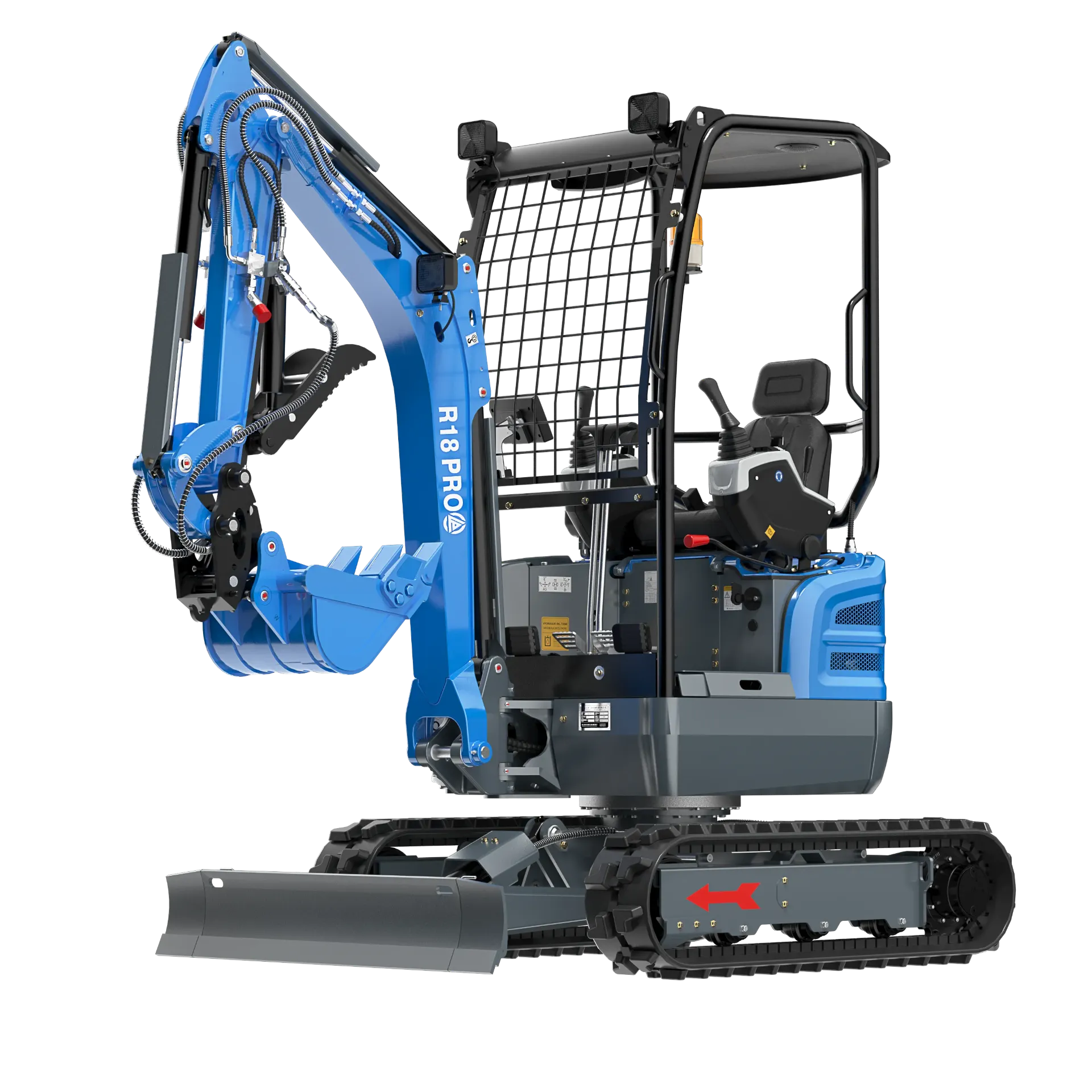
For the R18 PRO you need a trailer with a payload of at least 1,900 kg, a towing vehicle with a towing capacity of at least 2,500 kg and a BE licence. Here is how to work it out:
- Load: R18 PRO with 1,818 kg according to the data sheet, plus an extra bucket, for example. Allow for around 1,900 kg.
- Choose a trailer: a plant trailer with a maximum authorised mass of 3,000 kg carries 2,390 kg at Humbaur, so it weighs 610 kg empty. The 1,900 kg load fits.
- Check towing capacity: loaded, the trailer weighs 1,900 kg + 610 kg = 2,510 kg. The braked towing capacity of your car (field O.1) must be at least this high.
- Determine the licence: an SUV with a maximum authorised mass of 2,600 kg plus a 3,000 kg trailer makes 5,600 kg. That is more than 4,250 kg, so B96 is not enough. The trailer is below 3,500 kg, though, so BE will do.
- Speed: observe the limits for car and trailer combinations in your country.
The machine weighs 735 kg. On a trailer with a maximum authorised mass of 1,300 kg behind a car with 2,150 kg, the combination comes to 3,450 kg. That is below 3,500 kg, so a standard category B car licence is enough.
Securing the load
The machine must be secured so that it cannot slip, tip over or fall off, even under full braking or a sudden evasive manoeuvre. Road traffic rules in the EU require this; in Germany, for example, § 22 StVO refers to the recognised rules of good practice.
- Drive the machine onto the centre of the loading area in a straight line, with the centre of gravity just in front of the trailer axle.
- Retract the boom and lower bucket and dozer blade onto the loading area.
- Switch off the engine, remove the key and turn off the battery isolator.
- Secure the machine diagonally with at least four chains or lashing straps at its lashing points. The operating manual shows where they are.
- Do not run chains or straps over hydraulic hoses or cylinders.
- Secure extra buckets and attachments separately.
- Stop after the first few kilometres and check the tension.
Commercial users: driving times and tachograph
If tradespeople or landscaping businesses take their own machine to the site, an exemption from the tachograph usually applies. It covers combinations up to 7.5 t within a radius of 100 km (EU Regulation 561/2006, summarised by the Deutsche Handwerks Zeitung, in German).
- Principle: above a maximum authorised mass of 3.5 t, trailer included, driving and rest times must be recorded.
- Craftsman exemption: from over 3.5 t up to 7.5 t, this does not apply within 100 km of the company base. Condition: you transport materials, equipment or machines for your own work, and driving is not your main activity.
- Over 7.5 t: there is no exemption.
- Cross-border: since 1 July 2026, separate rules apply to cross-border transport from 2.5 t. There is an exemption for own machines carried on your own account there, too.
If in doubt, your chamber of crafts or national transport authority can tell you what applies to your business.
Delivery or collection?
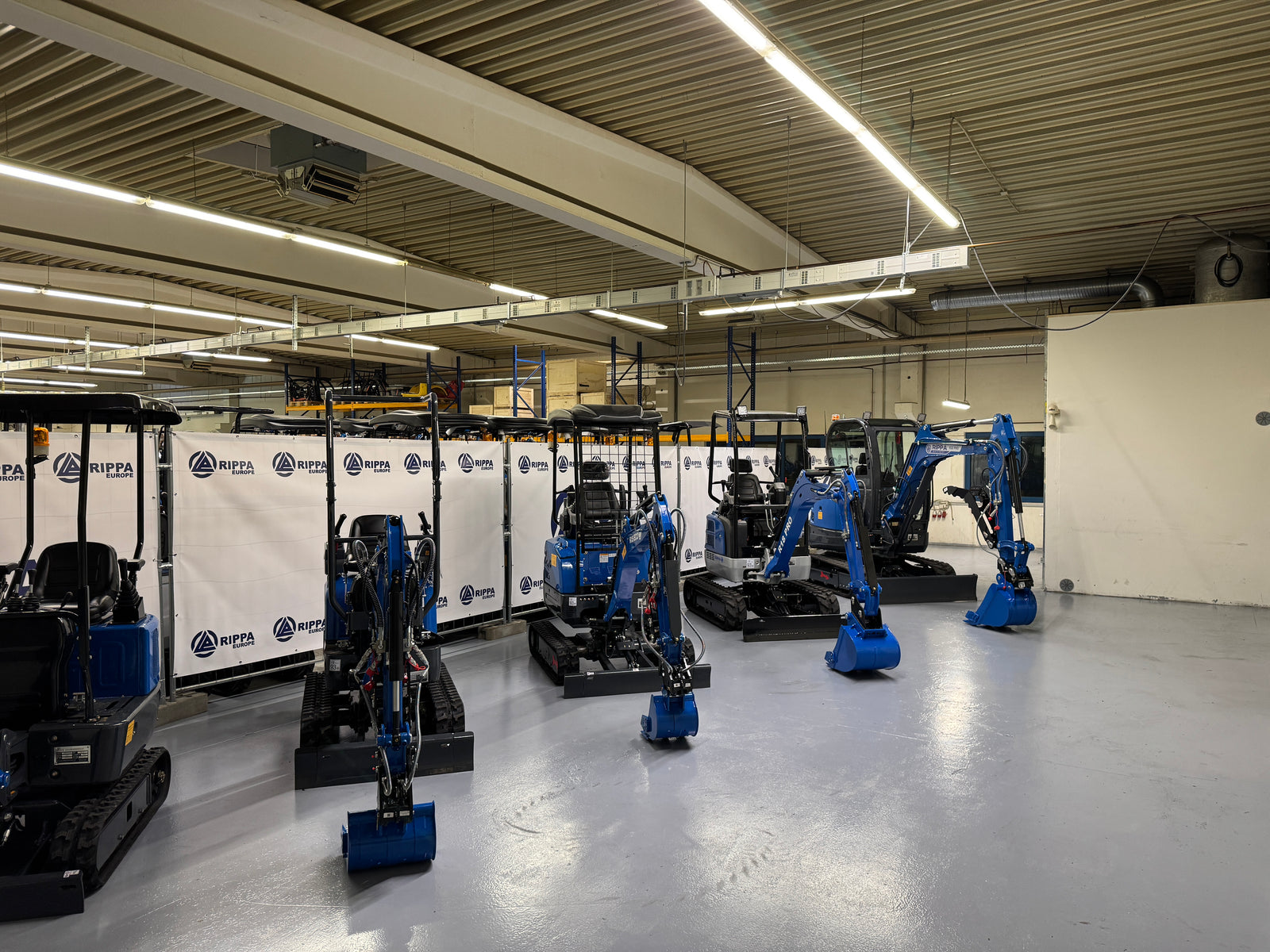
You do not have to transport your Rippa mini excavator yourself. Rippa delivers within the EU in 3 to 10 days.
- Delivery: for the R32 PRO and the R57 this is the easiest option, because they are too heavy for a car trailer.
- Collection with Click & Collect: you reserve the machine online and pay a deposit of €300, which is fully credited against the purchase price. You collect it from a partner dealer.
The right mini excavator for your combination
Compare all Rippa mini excavators from 735 kg to 5.8 t, or reserve your machine for collection from a partner dealer.
View all mini excavators Click & CollectFrequently asked questions
Suitable mini excavators
Sources (as of October 2026)
- Licence categories: § 6 FeV, § 6a FeV, Annex 3 FeV (Germany), FPS Mobility (Belgium)
- Speed and load securing in Germany: § 3 StVO, § 22 StVO, 9th exemption regulation
- Towing capacity and nose weight: ADAC, Bußgeldkatalog (in German)
- Tachograph: Deutsche Handwerks Zeitung (in German); EU directive: WKO (in German)
- Trailer data: Humbaur plant trailers HS
This information does not replace legal advice. Your vehicle documents and the regulations in force in your country are what count.